Spreading ButterBox Communication Widely with DeltaChat!

With our recent updates on ButterBox, we have implemented a huge step forward in both options for customization and inter-communication. Through our new setup wizard and admin panel, we allow anyone hosting a ButterBox to completely control and configure the available services. This includes changing the public wifi and hostname of the box, both visibly and over the local network. The important side effect of this is that we can now have multiple butterbox instances co-existing on a local area network.
 Credit: Sarah Crowley
Instead of just "butterbox.local" by itself, you can add additional boxes, perhaps whimsically named "breadbox.local", and "jambox.local"... you can really SPREAD out! Food puns aside, the ability to have multiple box instances connecting and communicating on a wide-range local area network (WiFi HaLow anyone?!) means there are more, new ways people can use ButterBoxes in the real world.
One of our first explorations of this possibility was adding built-in support for DeltaChat, the secure decentralized messenger, within the Butter ecosystem. This means, in the base ButterBox firmware image, we include the MadMail server, an open-source server project that is an instance of the DeltaChat "Chatmail Relay" concept. The MadMail server is built using Ansible as part of our Churn firmware image building process. It is then configured by the box admin during the setup using the interactive MadMail installer.
ButterBox also bundles the latest release of the DeltaChat Android APK in the image with each release. This ensures new people can use DeltaChat even without access to an internet-based app store. In the future, we plan to also include the desktop software, a local web interface, and possibly an iOS binary, for jailbroken or sideload capable devices.
Within the new Butter portal interface, we name our DeltaChat support "Secure Messenger", since we assume most people won't be familiar with the specific brand name. This also helps us distinguish it from our Matrix-powered Convene Public Chat servicee. When the user selects the Secure Messenger option, they are taken through a prompt to first install the DeltaChat app, and then set up their "offline account". This auto-generates an "Instant Onboarding" account link. With just one tap, QR scan or copy-and-paste action (all can work), their DeltaChat app is configured with the local MadMail server on the ButterBox they are connected to. The user just needs to enter the name for the account, and they are in!
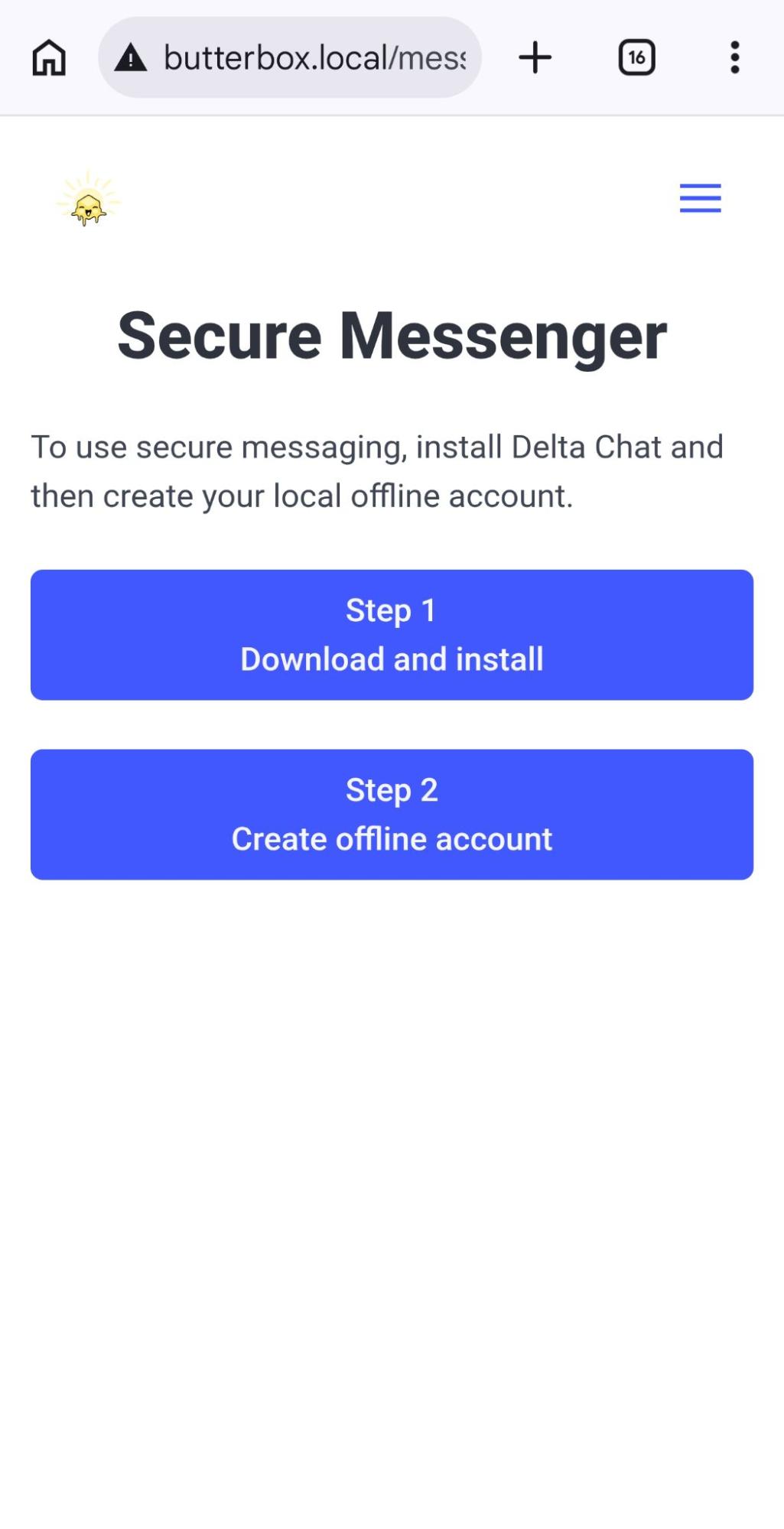
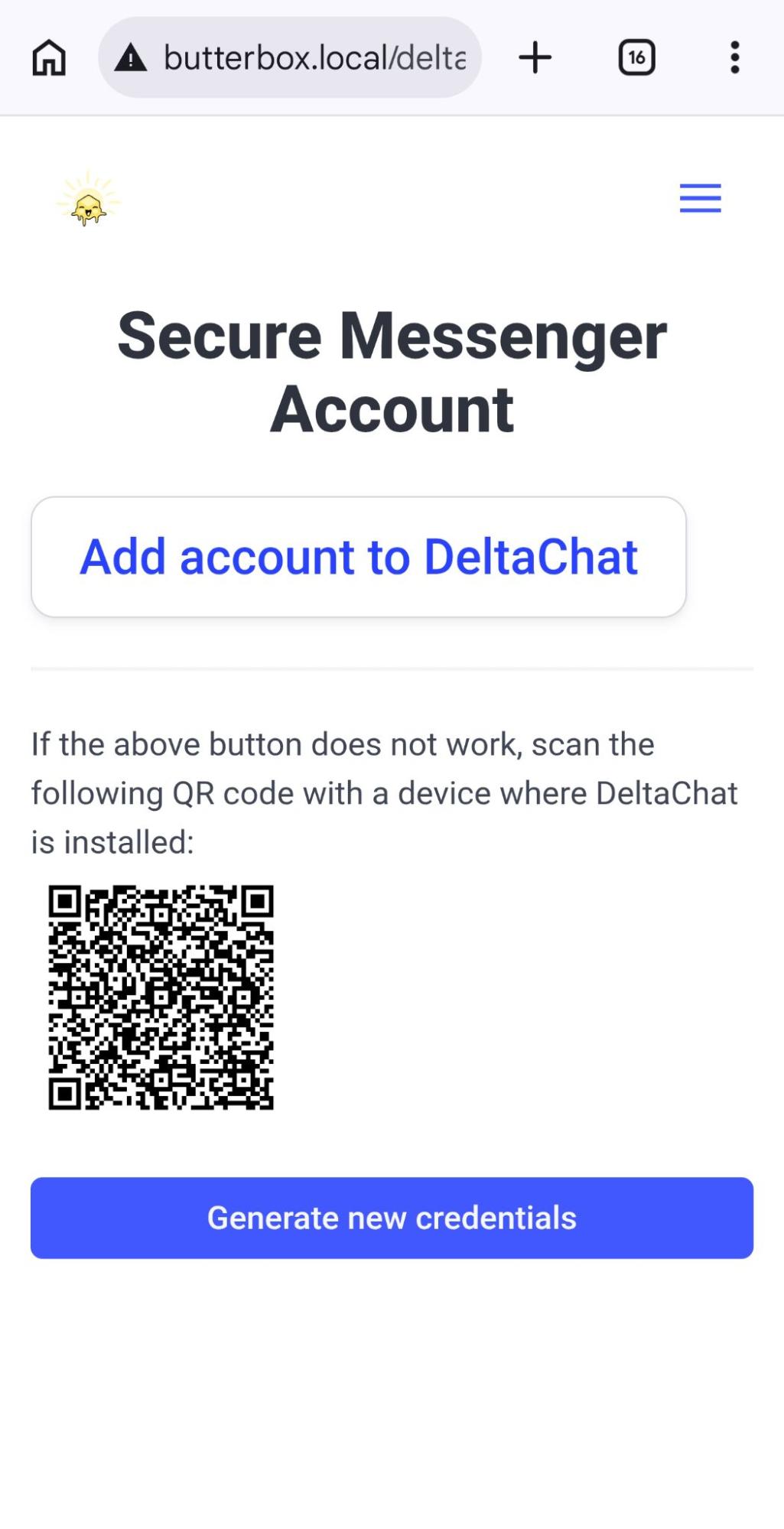
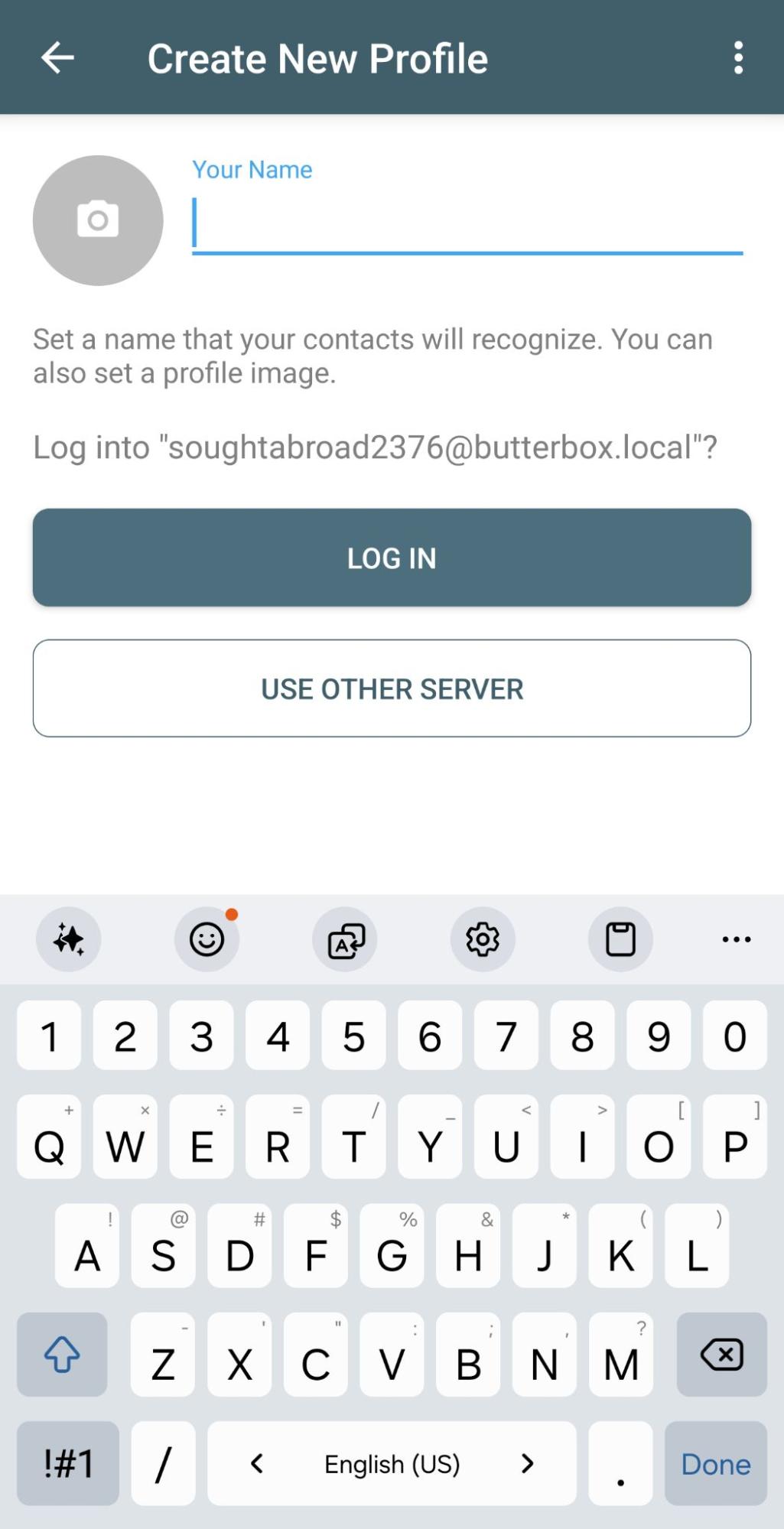
To then communicate with someone else or join a DeltaChat-hosted group chat, they just need to scan the QR code or tap an invite link from that person or group. You could establish multiple "public" groups even, and publish those on the ButterBox as a local "pack" website for people to join. The security of these conversations is end-to-end, established and guaranteed by the key information encoded in the codes and links.
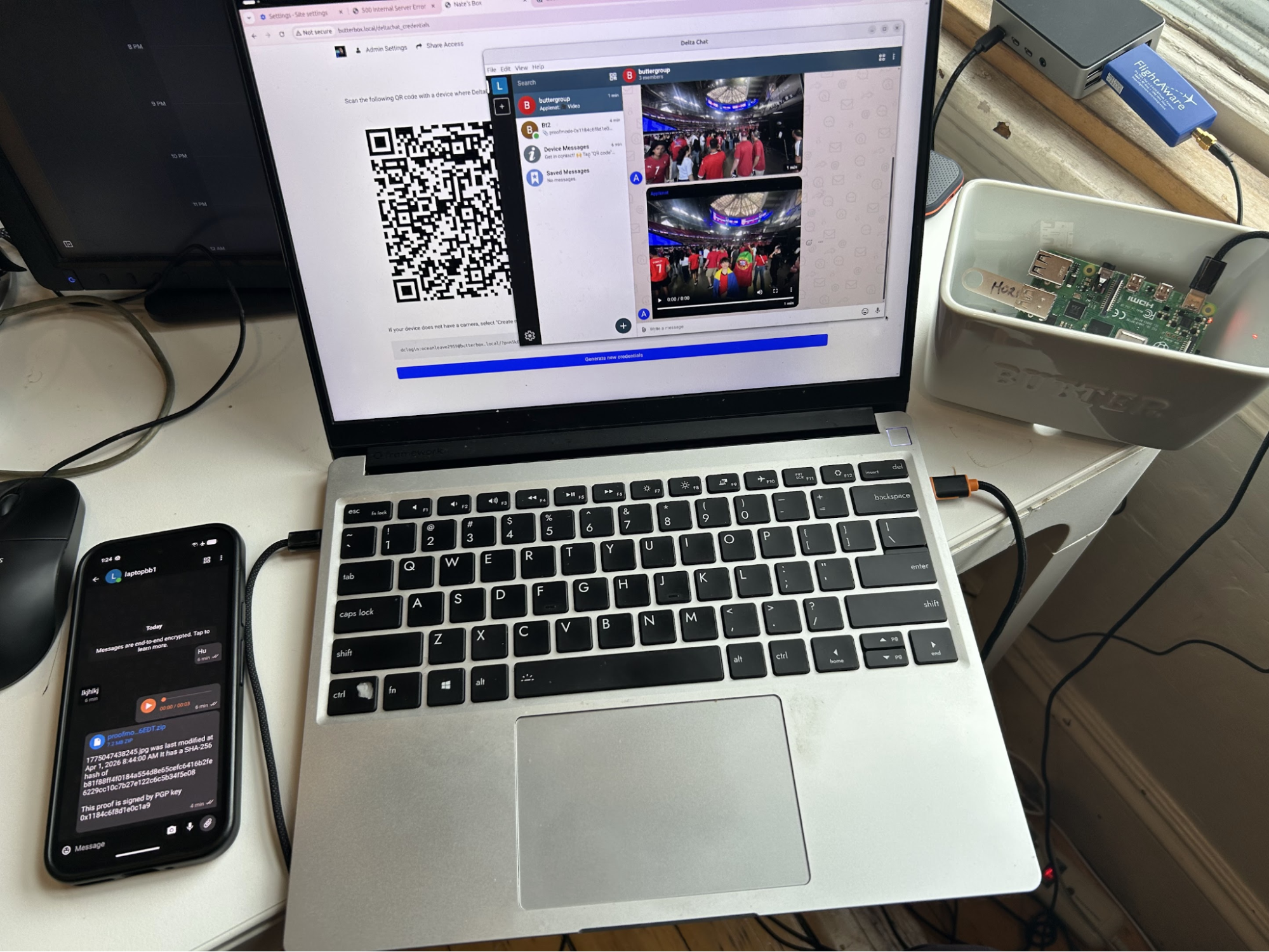
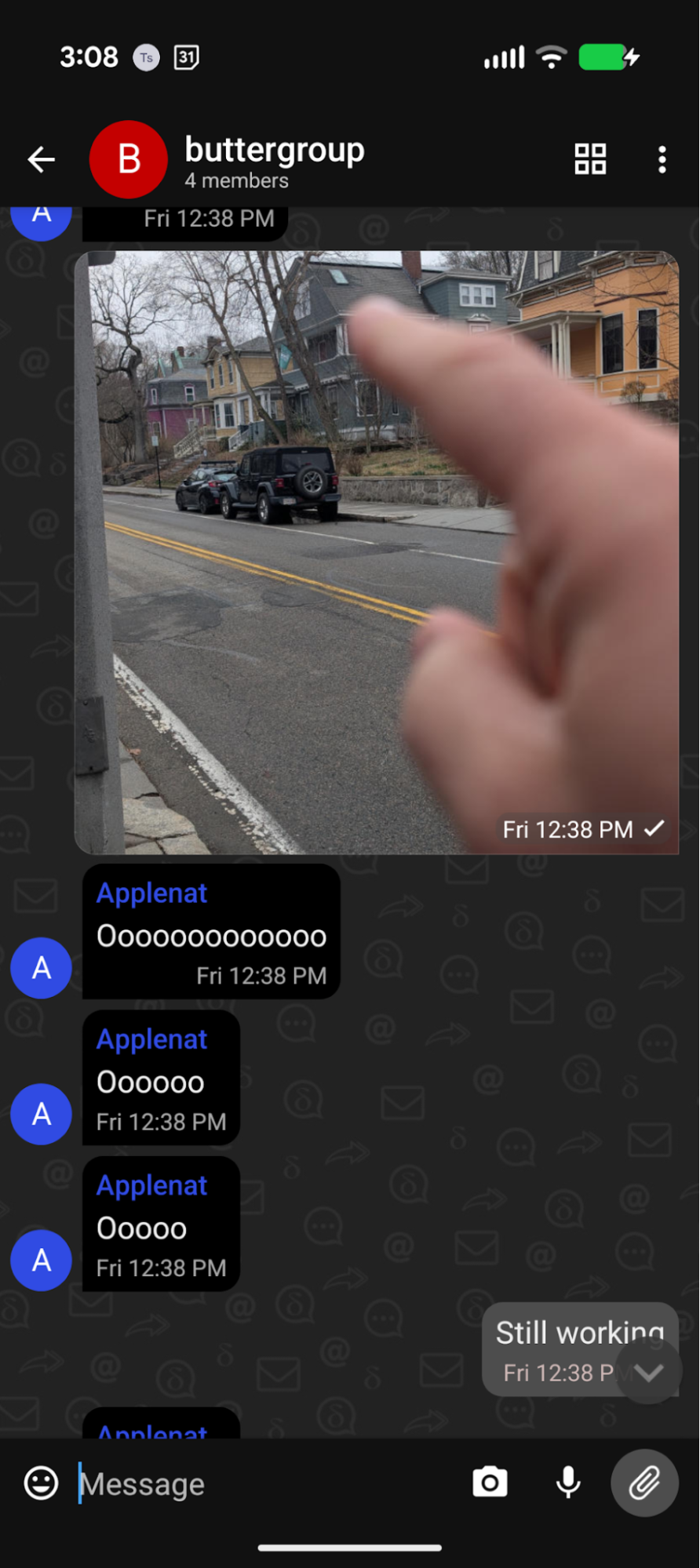
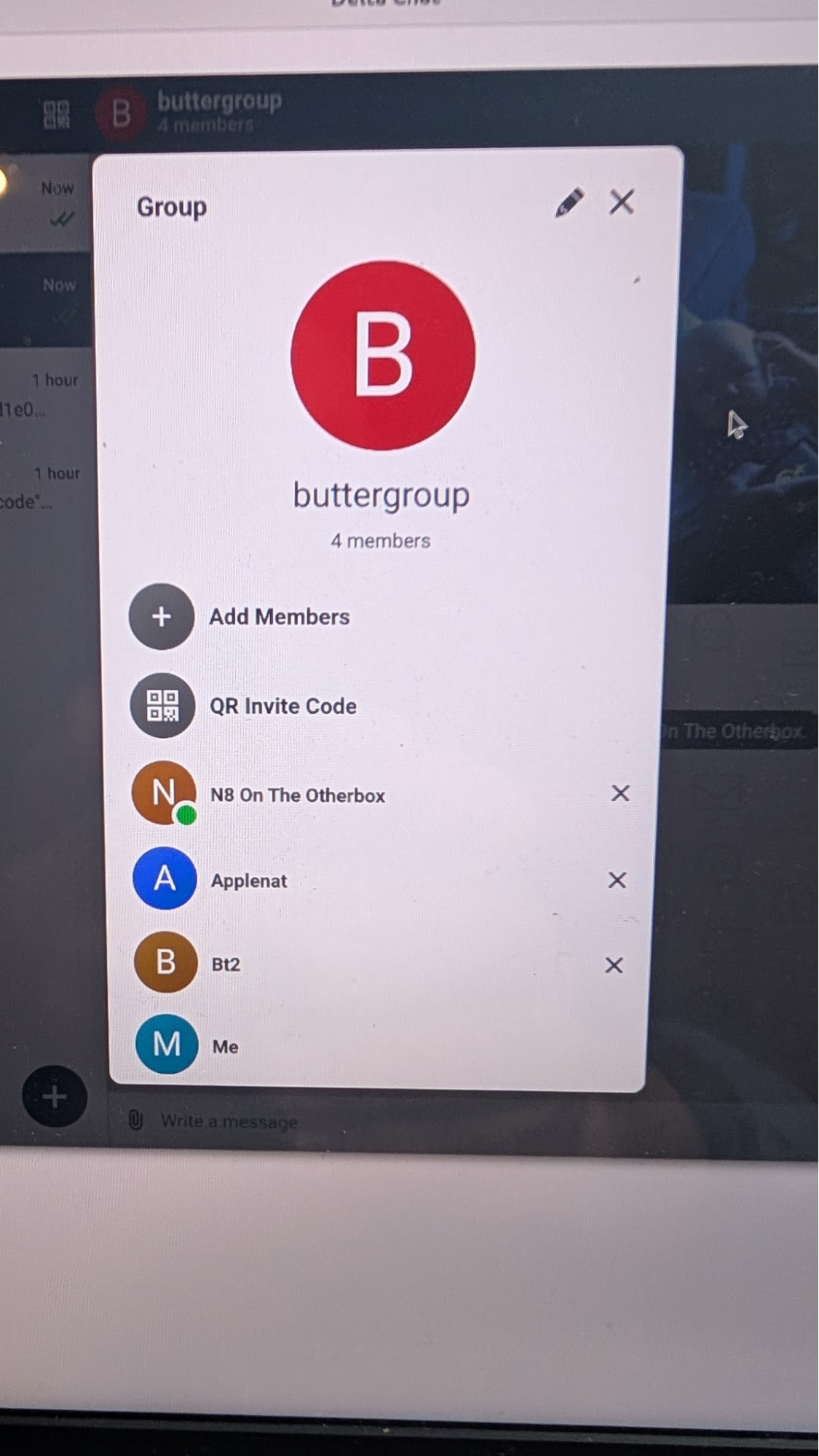
Here is an image of two DeltaChat clients, one on an Android phone, and one on a Linux desktop, communicating with each other, through the Raspberry Pi butterbox next to them:
Many Ways to Spread the Network
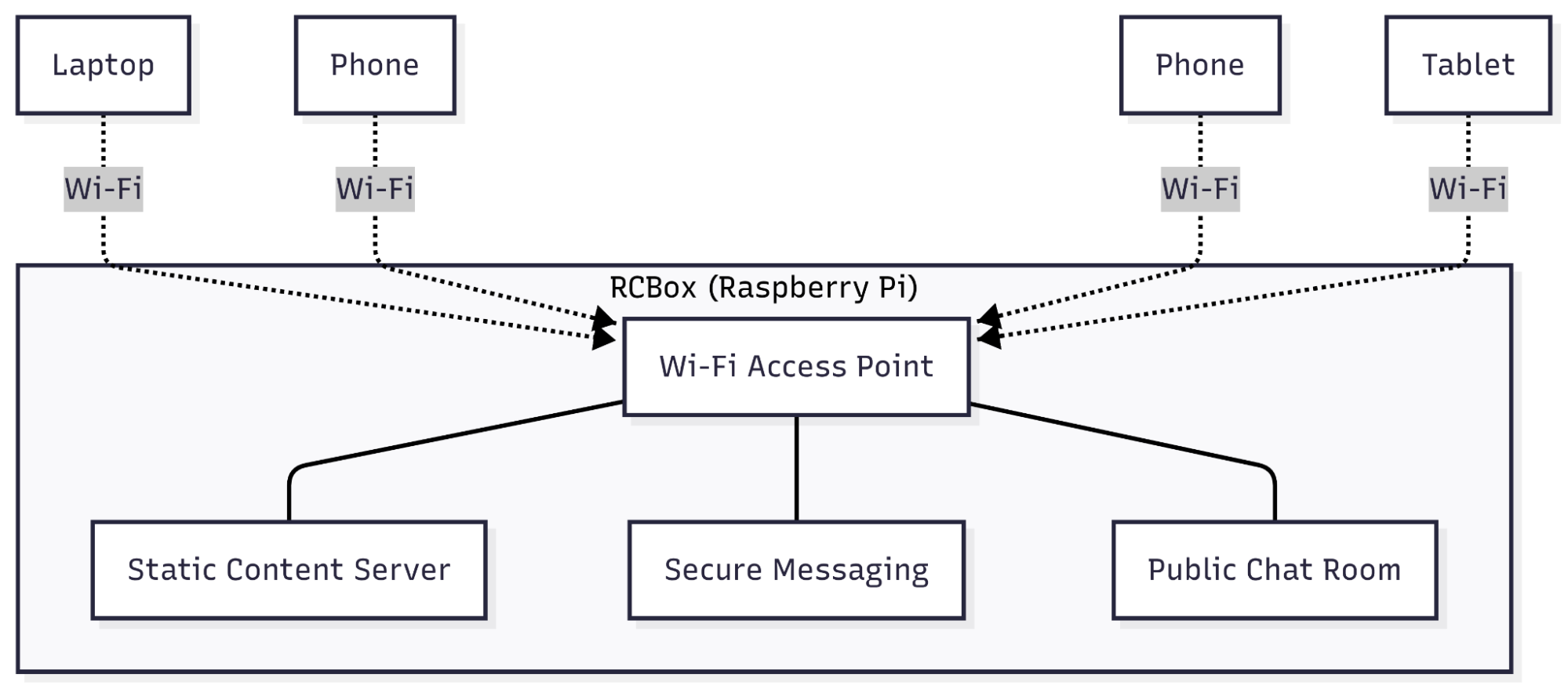
The diagram below shows our pre-existing approach of multiple users on different devices connecting to one ButterBox. This model has been used for digital security training events and offline content distribution in Southern Africa and Latin America. DeltaChat works great in this configuration too, with a single ButterBox as an asynchronous messaging hub people can physically visit to sync messages, share files, and more throughout the day.
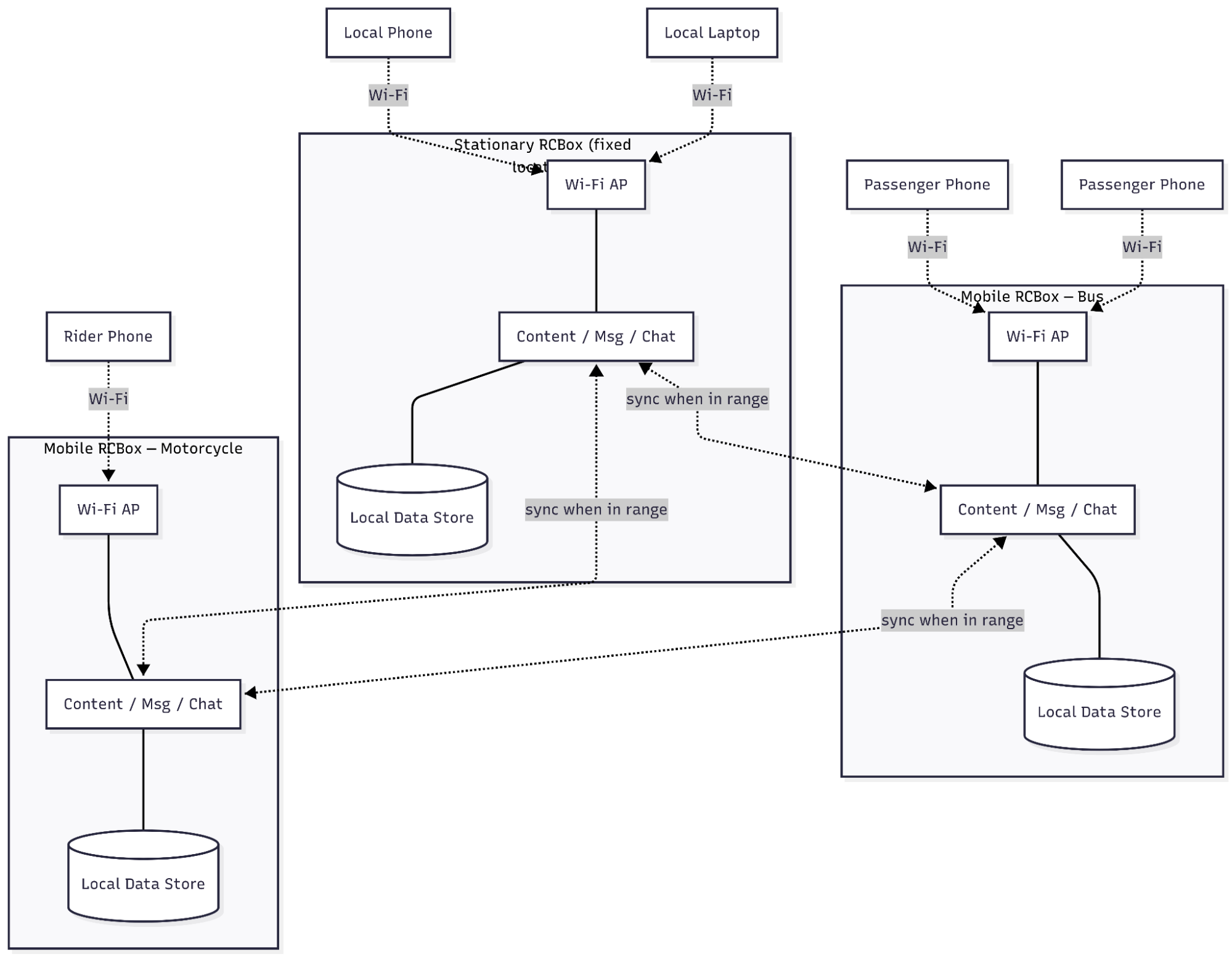
The diagram below shows an example of how a combination of stationary and mobile ButterBox instances could support a wide area field or event location configuration, with opportunistic communication and syncing between multiple boxes when possible.
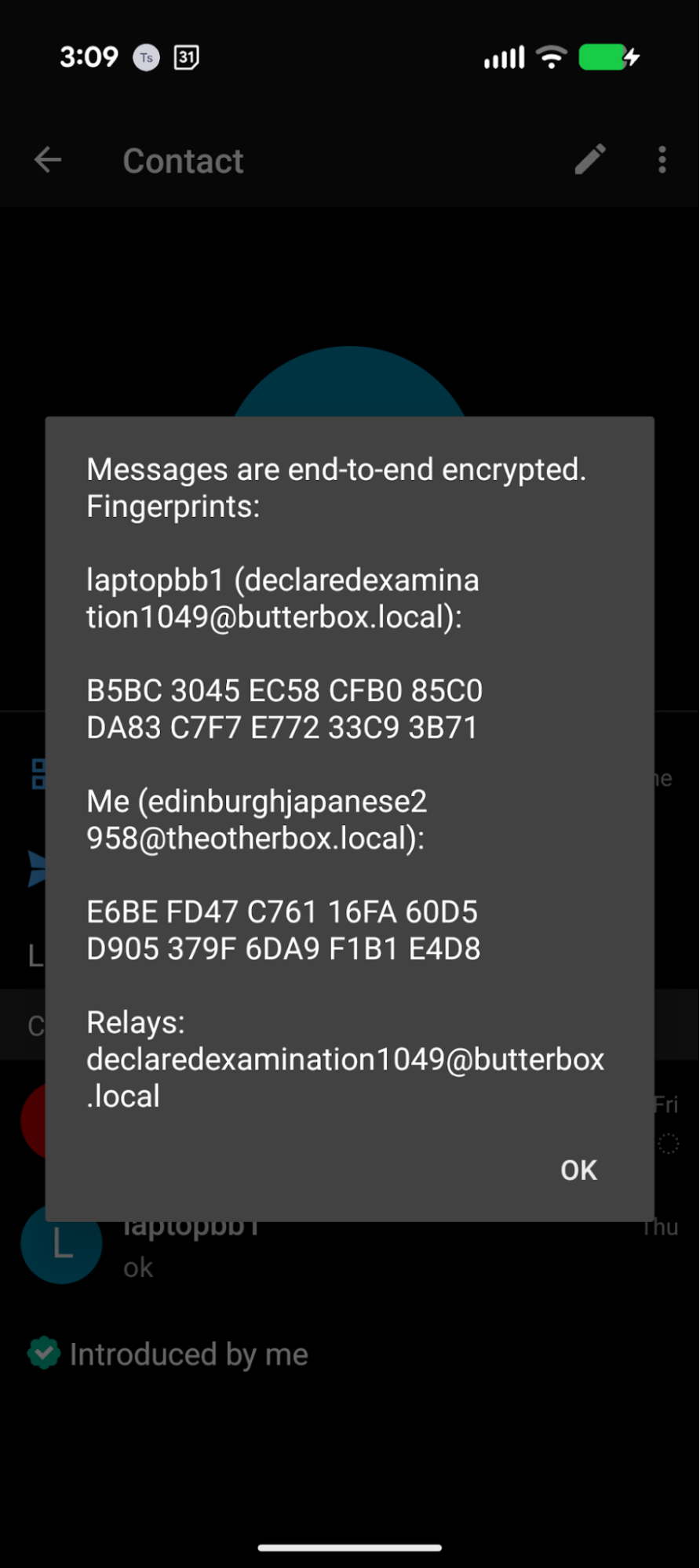
Just to be clear, peoplec connecting through different MadMail server instances on different ButterBox networks can all communicate together with end-to-end encryption in one group chat, as shown here:
The capability to link multiple boxes through local and long range wireless networks
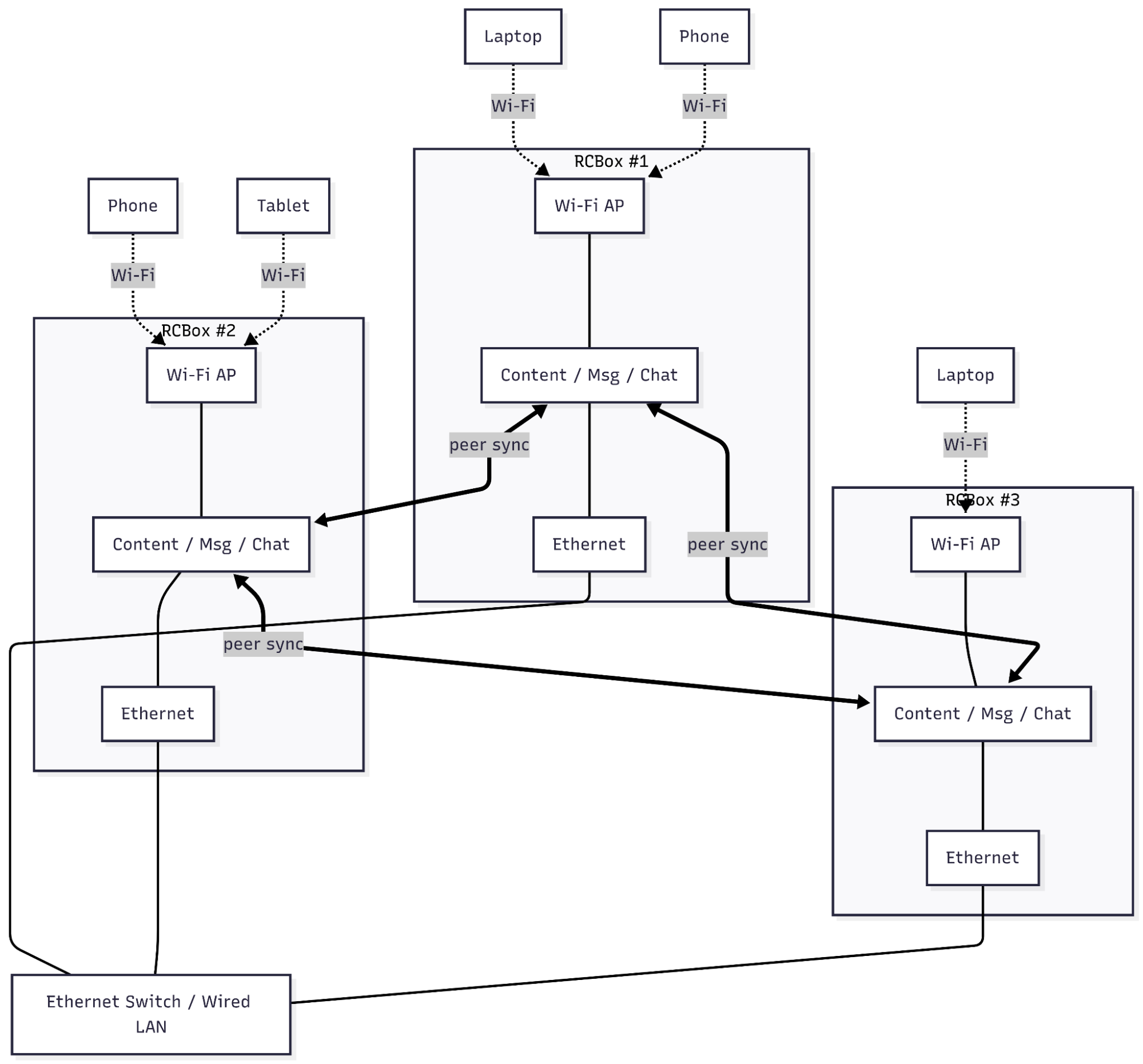
The diagram below shows a multi-ButterBox (or "RCBox" in the diagram) deployment configuration using a basic ethernet wired LAN network. Each ButterBox uses the ethernet LAN as a "backhaul" connection between them, while still acting as an independent hotspot. This configuration can be used in the "campus residence" and the "cultural and social center" contexts, since both traditionally have large scale wired LAN networks. In addition, we have seen city-wide LAN networks built in places like Cuba for their "StreetNet" system, with the cost and complexity to build large LAN networks using Cat-5 ethernet to be fairly simple.
Long Range Wireless: LoRa vs Wifi HaLow research
Using the application of user research coupled with our technical explorations into long range wireless solutions, our team focused on comparing two available technologies: LoRa and WiFi HaLow. The findings were that with our current focus on IP based protocols such as HTTP and SMTP, using an IP-based network is the most ideal and compatible solution. This means WiFI HaLow is best suited for the current configuration and capabilities of ButterBox.
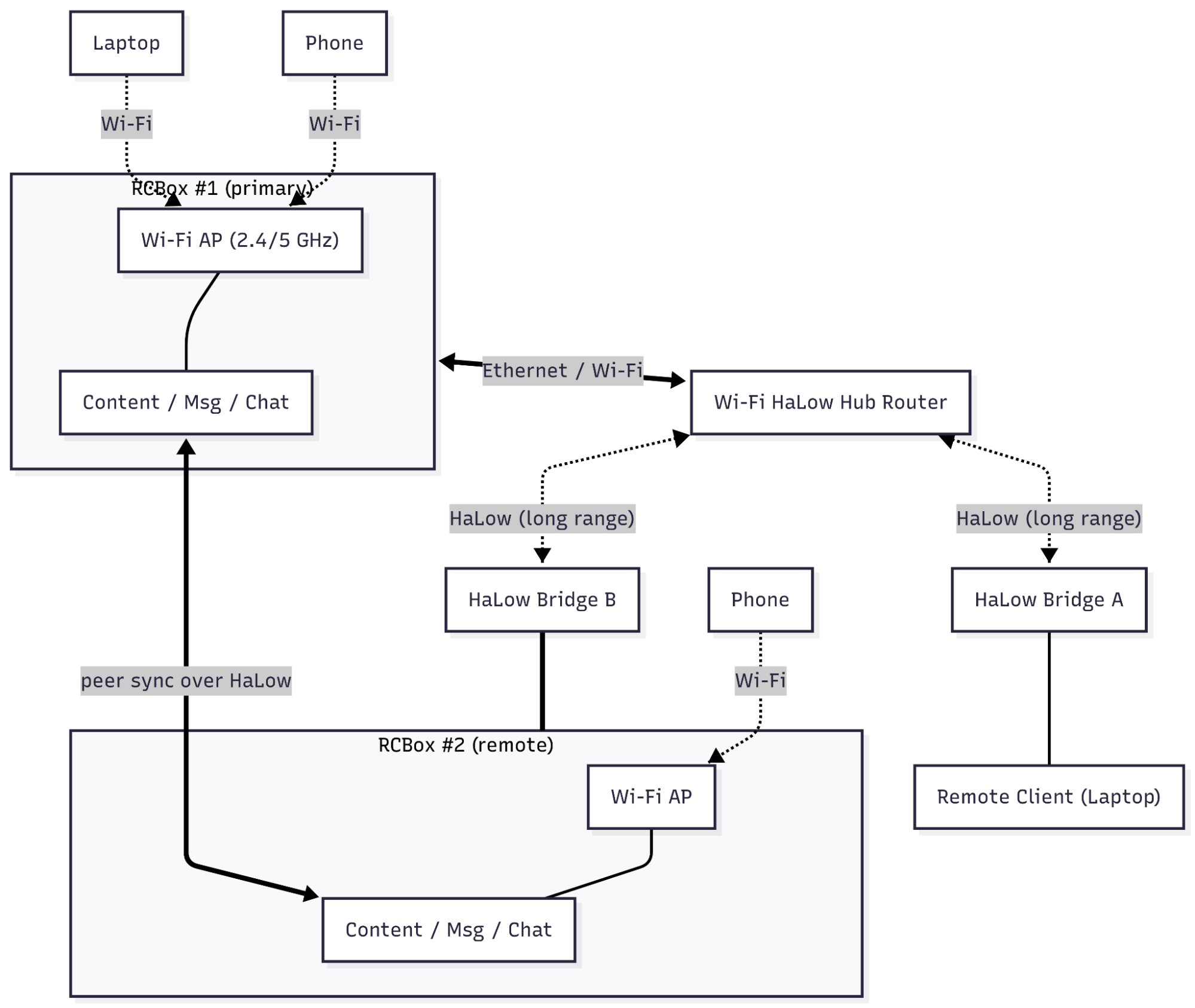
Using HaLow, the ButterBox is best deployed within a 500m radius of the next box and can connect with others (sending DeltaChat messages for instance) using Wifi HaLow radios with IP routing to extend the physical range and number of nodes for viable communication. Therefore, one could support the "microdistrict" and/or "field or event location" deployment of ButterBoxen to share content and send encrypted messages.
Read the full public findings from our radio research team.
Below is a diagram showing a Long Range MultiBox (LRMB!) deployment using Wifi HaLow hubs and bridges, with a diverse set of ButterBoxen and clients.
Spreading the Dream
The buttery dream we have is that ButterBox with DeltaChat can be a platform for both permanent and temporary shutdown-resilient communication networks that are both secure and simple to setup. We are working towards this by building in the MadMail server and DeltaChat apps directly into our firmware images, improving configuration support to allow for easier multiple box coexistence, and updating our user interface to support "one tap" or "one scan" instant account provisioning. Our early testing is promising, and the potential is great. As we churn forward ahead, we definitely see the rich cream beginning to clump into delicious, golden, decentralized butter!